Research Output
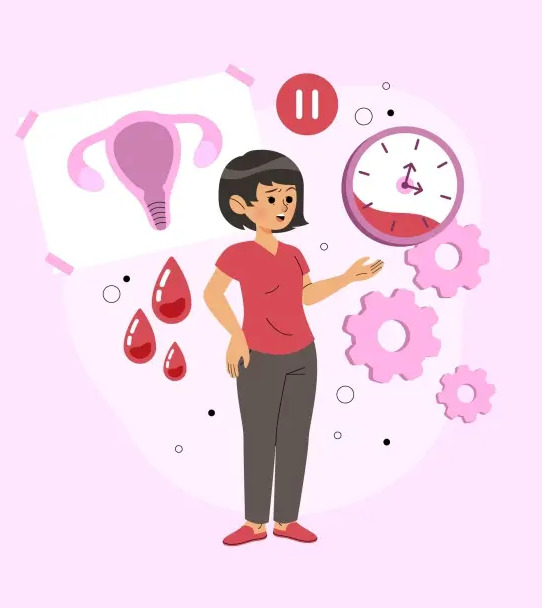
Phase-based Women's Health Recommendation and Prediction System
Innovations in Healthcare Technology and Management · Bentham Books
Core contribution
A RAG-augmented LLM system that classifies menstrual cycle phases and generates personalised diet and exercise plans tailored to each phase's physiological profile, addressing a gap in healthcare technology where generic advice ignores intra-cycle phase variation.
Developed a FastAPI-based recommendation pipeline that uses large language models with RAG to deliver phase-specific health guidance for women. The system classifies cycle phases from user inputs and retrieves evidence-backed recommendations, improving query resolution efficiency over a baseline generative approach.
My contribution
Designed the RAG pipeline, implemented the LLM integration via the Gemini API, built the FastAPI backend, and conducted the evaluation of recommendation quality across cycle phases.

Towards Intelligent Manga Generation: Exploring Diffusion Models, GANs, and Deep Learning Approaches
2025 2nd International Conference on Recent Trends in Electrical, Electronics and Computing Technologies (ICRTEECT) · Conference Paper
Core contribution
This work proposes and evaluates a webtoon-style manga generation pipeline that integrates Magi layout with Anime Detailer XL LoRA and multi-modal image generation models to automate narrative and artistic synthesis
The paper investigates GANs, CNNs, diffusion models, and multi-modal large language models for AI-driven manga and webtoon creation
My contribution
Model selection and evaluation for manga and webtoon generation, and contributed substantially to the research design, literature review, and experimental analysis in the paper.
Paper DOI:10.1109/icrteect67512.2025.11448686